
My Child Is So Fussy With Food
🕒 10 min read | 👤 Recommended for: Parents and caregivers of toddlers, preschoolers and school-aged children (1–12 years)
My Child Is So Fussy With Food – Is This Normal?#
If your child seems to survive on beige foods, refuses vegetables or suddenly decides their favourite meal is “yucky”, you’re certainly not alone. Fussy eating is one of the most common concerns I hear from parents, and it can leave families wondering whether they’re doing something wrong or if their child is missing out on important nutrients.
The reassuring news is that some degree of picky eating is a normal part of childhood development. Many children become more selective with food as they grow and learn to explore their independence. While this can be frustrating, it doesn’t necessarily mean something is wrong.
At the same time, not all fussy eating is the same. For some children, food refusal goes beyond a typical phase and begins to affect nutrition, growth, family life or emotional wellbeing. Understanding the difference can help you feel more confident about what to expect, what supports healthy eating habits, and when it may be time to seek professional guidance.
Quick Summary#
Most children experience some degree of fussy eating as they grow.
Many feeding challenges improve with time, patience and low-pressure mealtime routines.
Pressure, bribing and forcing children to eat often make food refusal worse.
A structured, family-centred approach helps children build confidence around food.
Including Confident, Curious and Courageous Foods at meals helps children explore food without pressure.
If eating is causing distress, affecting growth or limiting nutrition, professional support can make a real difference.
What Is Normal Fussy Eating?#

Many children become more selective with food between the ages of 18 months and 6 years.
This often happens because children are developing independence, their appetite naturally slows after infancy, and they’re becoming more cautious about unfamiliar foods. These changes are a normal part of development and don’t necessarily indicate poor parenting or a nutritional problem.
A child may:
- suddenly reject foods they previously loved
- prefer familiar foods
- eat very little one day and much more the next
- refuse vegetables
- separate foods on their plate
- be cautious about trying new foods
Although these behaviours can be frustrating, they are usually temporary.
“Fussy eating is common during childhood. It doesn’t mean you’ve failed, and it doesn’t mean your child will always eat this way.“
Did You Know?#
Children often need to see a new food 10–20 times or more before they’re comfortable tasting it. Learning to like a food is a gradual process, and simply seeing it regularly can be an important step.
That’s why I encourage families to keep offering Curious and Courageous Foods alongside familiar Confident Foods, without any pressure to eat them.
Seeing, touching, smelling and helping prepare foods are all valuable learning experiences.
Where Is Your Child on the Fussy Eating Spectrum?#
Every child eats differently, and fussy eating doesn’t look the same for every family. While many children go through a typical phase of selective eating, others may experience feeding challenges that are more persistent or begin to affect their nutrition, growth or family life.
The infographic below can help you understand where your child’s eating patterns might fit. It’s not a diagnostic tool, but it can provide a helpful guide to what’s commonly seen, when gentle support may be beneficial, and when it’s worth seeking professional advice.
Remember: children don’t stay in one category forever. With time, patience and the right support, many children become more confident and flexible eaters.
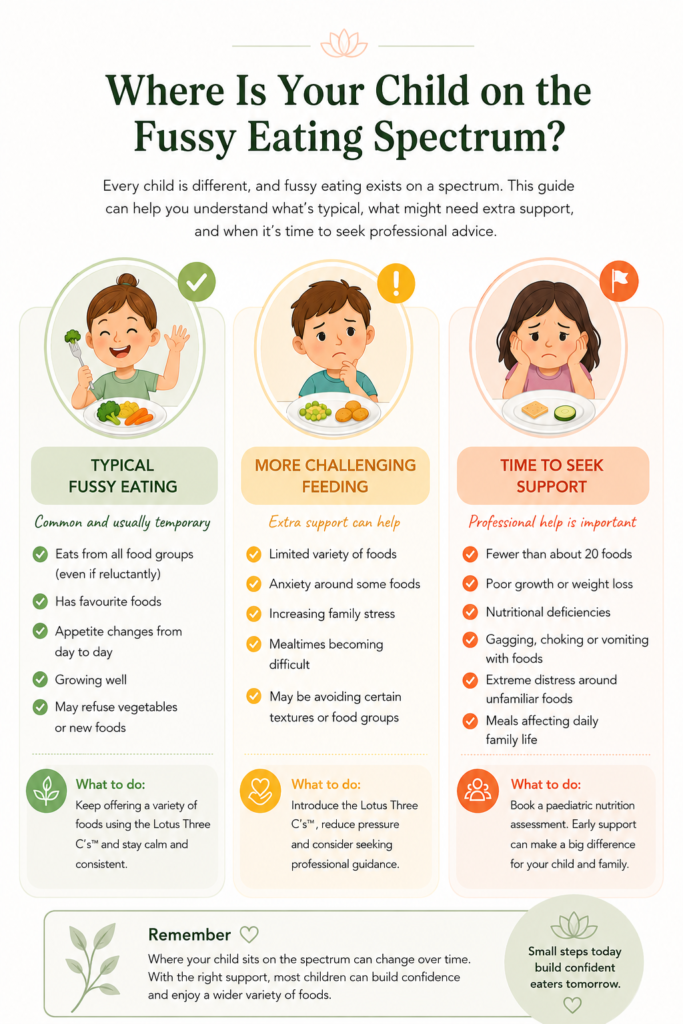
No matter where your child sits on the spectrum, my Lotus Three C’s™—Confident Foods, Curious Foods and Courageous Foods—provide a gentle, pressure-free framework for helping children build confidence with food at their own pace.
Gentle Reminder#
This spectrum is intended as a guide only. Every child develops differently, and feeding challenges can change over time. If you’re unsure about your child’s eating or growth, it’s always okay to ask for support.
When Should Parents Be Concerned?#
While many children experience typical picky eating, some feeding difficulties deserve a closer look.
You may benefit from professional advice if your child:
These signs don’t necessarily mean something serious is wrong, but they do suggest it’s worth exploring further.
Gentle Reminder#
Every child develops differently. Comparing your child’s eating to a sibling, cousin or friend often creates unnecessary worry. Focus on your individual child’s overall growth, health and progress over time.
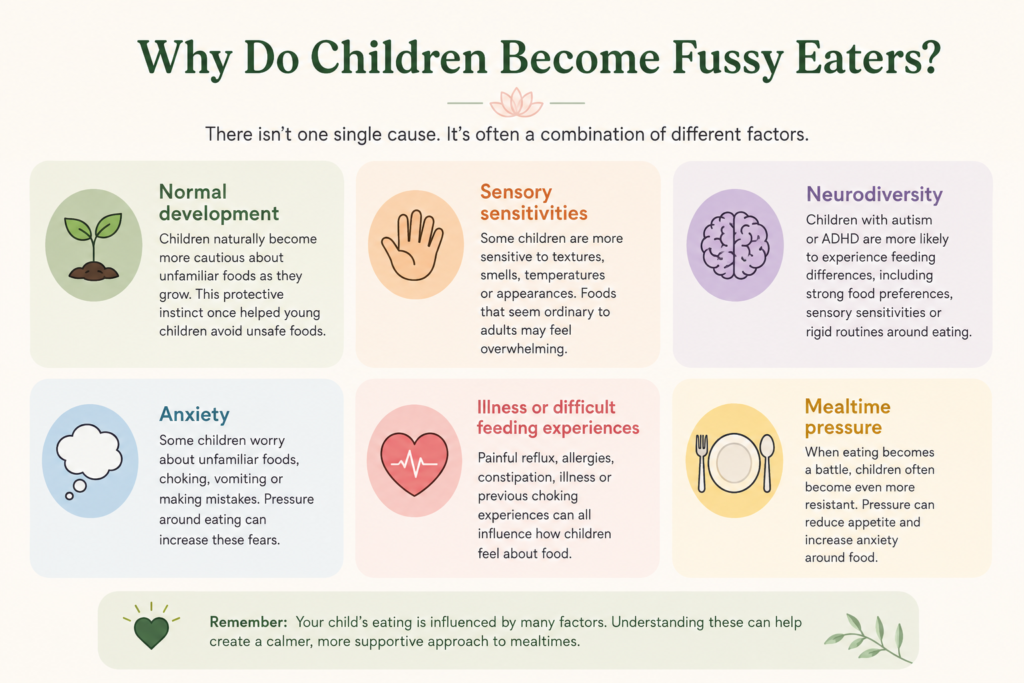
Why Do Children Become Fussy Eaters?#
There isn’t one single cause of fussy eating.
Instead, it’s often a combination of developmental, sensory, emotional and environmental factors.
Normal development#
Children naturally become more cautious about unfamiliar foods as they grow. This protective instinct once helped young children avoid eating unsafe foods.
Sensory sensitivities#
Some children are more sensitive to textures, smells, temperatures or appearances. Foods that seem ordinary to adults may genuinely feel overwhelming.
Neurodiversity#
Children with autism or ADHD are more likely to experience feeding differences, including strong food preferences, sensory sensitivities or rigid routines around eating.
Anxiety#
Some children worry about unfamiliar foods, choking, vomiting or making mistakes. Pressure around eating can increase these fears.
Illness or difficult feeding experiences#
Painful reflux, allergies, constipation, illness or previous choking experiences can all influence how children feel about food.
Mealtime pressure#
When eating becomes a battle, children often become even more resistant. Pressure can reduce appetite and increase anxiety around food.
“Children learn to enjoy food best when mealtimes feel safe, relaxed and free from pressure.“
What Doesn’t Help#
It’s completely understandable to feel frustrated when your child refuses another meal.
However, some well-intentioned strategies can actually make eating more stressful.
These include:
- forcing children to eat
- bargaining or bribing
- insisting on “just one bite”
- rewarding eating with dessert
- commenting on how much they have eaten
- turning every meal into a negotiation
These approaches may work in the short term but often reduce children’s confidence around food over time.
Evidence Update#
Research consistently shows that responsive feeding approaches are associated with healthier eating behaviours and more positive relationships with food than pressure-based feeding strategies.
Helping Your Child Feel Confident Around Food#
When children feel safe, relaxed and free from pressure, they’re much more likely to become curious about food over time.
Rather than looking for quick fixes, focus on creating positive experiences around eating. These small, consistent moments build confidence – and confidence often comes before trying new foods.
My Lotus Three C’s™#
Throughout this article, you’ve probably noticed one recurring theme: helping children feel safe around food.
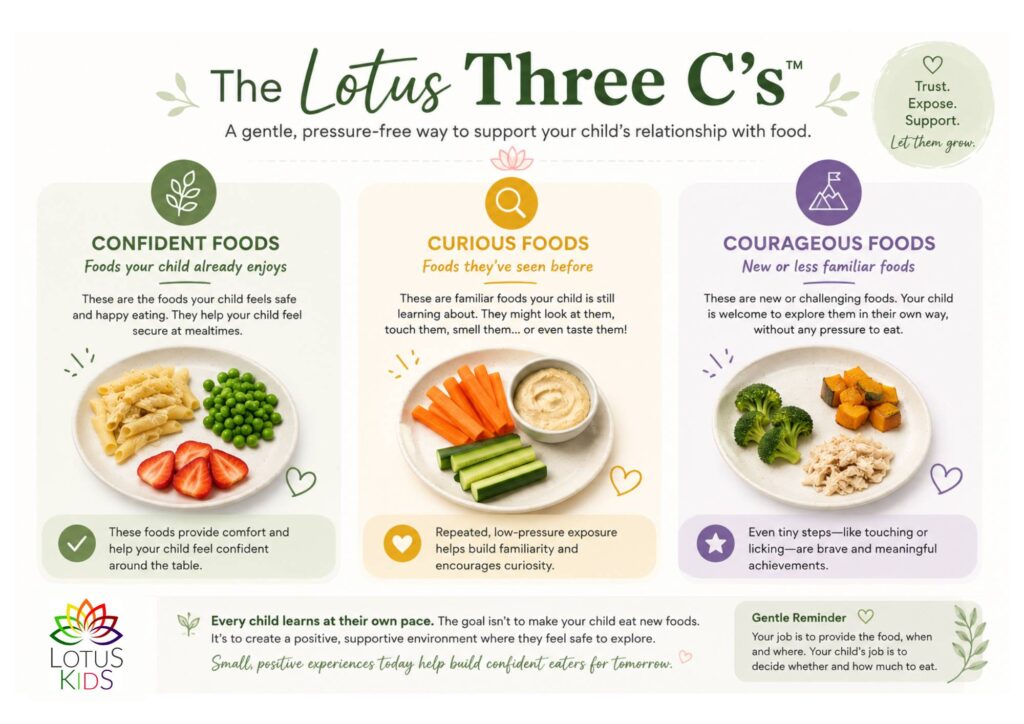
That’s exactly why I developed the Lotus Three C’s™—a simple framework that helps families offer familiar foods while gently encouraging curiosity, without pressure or bribery.
Rather than focusing on getting children to eat more, the Lotus Three C’s help create mealtimes where children can build confidence naturally.
At every meal, aim to include:
Confident Foods#
Foods your child already enjoys.
These help them feel safe and relaxed at the table.
Curious Foods#
Foods they’ve seen before but are still learning about.
They might look, touch, smell or even lick them today – and that’s still progress.
Courageous Foods#
New or less familiar foods.
There is never any pressure to taste them.
Children simply have the opportunity to explore them.
This approach removes pressure while encouraging children to build confidence with food over time. Even looking at, touching or smelling a Courageous Food is a positive step.
Would you like to know more about the Lotus Three C’s?
Key Takeaway#
The Lotus Three C’s aren’t about getting children to eat more. They’re about helping children feel confident around food.
When meals regularly include Confident Foods, Curious Foods and opportunities to explore Courageous Foods, children can gradually build familiarity and trust without pressure, rewards or mealtime battles.
Create Predictable Meal Routines#
Children generally feel more confident around food when they know what to expect. Having a regular rhythm of meals and snacks throughout the day helps children recognise their hunger and fullness cues, while reducing the urge to graze or arrive at the table either overly hungry or not hungry at all.
Aim for a consistent routine of three meals and two to three planned snacks each day, allowing enough time between eating opportunities for appetite to naturally develop. Water can be offered between meals and snacks, while milk and other drinks are usually best enjoyed with meals.
Whenever possible, enjoy meals together as a family. Eating together gives children the opportunity to watch others enjoy a variety of foods, explore new flavours in a relaxed way and learn that mealtimes are about connection as well as nourishment. Even if family meals aren’t possible every day, sharing a meal whenever you can can make a positive difference.

Perhaps most importantly, try to keep the atmosphere around food calm and enjoyable. Conversation, laughter and connection help children feel safe at the table. Mealtimes don’t need to be perfect, and not every meal will go to plan. The goal is to create an environment where children can gradually build confidence with food, without pressure or expectations.
As you plan each meal, consider including a Confident Food, a Curious Food and, when appropriate, a Courageous Food. Over time, these regular, pressure-free opportunities can help children become more comfortable exploring new foods at their own pace.
“The goal isn’t to create adventurous eaters overnight. It’s to create children who feel safe, curious and confident around food.”
Reduce pressure at mealtimes#
It’s completely understandable to want your child to eat well, especially if you’re worried about their nutrition. However, when children feel pressured to eat, they often become more anxious around food rather than more willing to try it.
Pressure can take many forms, even when it comes from a place of love. This might include:
- asking for “just one bite”
- bargaining or bribing
- rewarding eating with dessert
- commenting on how much or how little they’ve eaten
- encouraging children to clean their plate
- repeatedly asking them to try a food they’ve already refused
Instead, focus on creating a calm, predictable mealtime where your child feels safe to explore food without expectations.
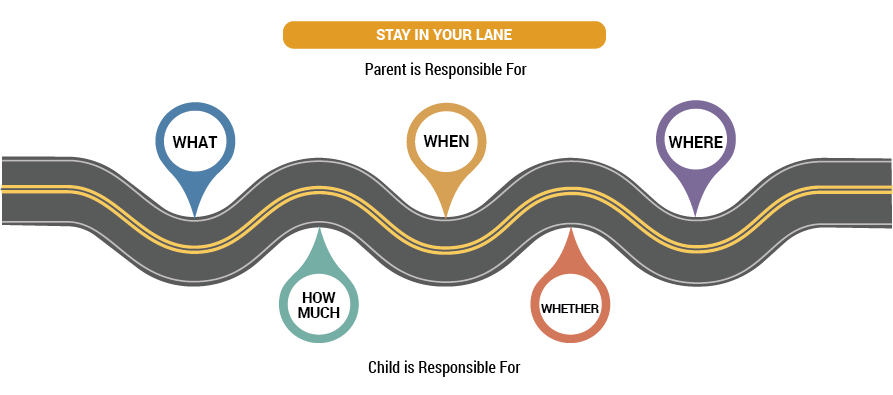
One approach I recommend is the Division of Responsibility in Feeding, developed by feeding expert Ellyn Satter. Parents decide what food is offered, when meals and snacks are served, and where eating takes place. Children decide whether to eat and how much to eat from the foods provided.
This approach helps remove pressure, supports children in listening to their own hunger and fullness cues, and creates a more positive relationship with food over time.
For Parents#
Remember: Your job isn’t to make your child eat.
Your role is to provide regular opportunities to eat in a calm, supportive environment. Your child’s role is to decide whether and how much to eat.
Remember That Learning Takes Time#
Learning to enjoy new foods is a gradual process. In fact, many children need to see a food numerous times before they feel comfortable tasting it – and that’s perfectly normal.
Progress doesn’t always mean taking a bite. Children learn through many different experiences, including:
- seeing a new food on the table
- helping choose foods at the supermarket
- washing or preparing ingredients
- smelling, touching or playing with foods
- talking about colours, shapes and textures
- watching other family members enjoy a variety of foods
These small, pressure-free experiences help build familiarity and confidence over time.
“Progress isn’t measured by one successful dinner. It’s built through hundreds of calm, pressure-free mealtimes.“
When Is It Time to Seek Professional Support?#
If feeding is becoming a source of ongoing stress, you’re not alone – and you don’t have to work through it by yourself.
Professional support can help if:
- meals regularly end in tears
- your child has an extremely limited diet
- growth or nutrition is affected
- eating creates anxiety for your child or family
- you’re feeling exhausted and unsure what to try next

As a Certified Practising Nutritionist with a special interest in paediatric nutrition, I work with families using compassionate, evidence-based strategies that support both nutrition and a positive relationship with food.
Together, we can explore what’s contributing to your child’s feeding challenges and develop practical, realistic strategies that fit your family’s needs.
You Don’t Have to Work This Out on Your Own#
If you’re feeling worried, overwhelmed or exhausted by mealtimes, please know you’re not alone. Feeding challenges can be stressful for the whole family, and seeking support doesn’t mean you’ve done anything wrong. Sometimes, having someone alongside you can make all the difference.
During a paediatric nutrition consultation, we’ll take the time to understand your child’s unique feeding journey and the factors that may be influencing their eating. Together, we’ll develop practical, realistic strategies that fit your child, your family and your everyday life.
Depending on your child’s needs, we may explore:
- growth, nutrition and overall health
- eating patterns and food variety
- sensory preferences and feeding challenges
- mealtime routines and family dynamics
- using the Lotus Three C’s™ to build confidence with food
- the Division of Responsibility in Feeding
- achievable goals and practical strategies to use at home
My aim is to help you feel informed, supported and confident – not judged. Families often tell me they leave their appointment feeling reassured, with a clearer understanding of their child’s eating and practical steps they can start using straight away.
The Bottom Line#
Fussy eating is incredibly common, and for many children it is simply one stage of normal development. While it can test even the most patient parent, most children benefit from calm routines, repeated exposure to foods and supportive, pressure-free mealtimes.
If your child’s eating is becoming increasingly limited, affecting their health or making family life stressful, early support can make a meaningful difference. Feeding doesn’t have to become a daily battle, and with the right guidance, mealtimes can become more relaxed and enjoyable for everyone.
Remember, every meal doesn’t need to end with your child eating something new. Sometimes success looks like sitting at the table, noticing a new food, touching it or talking about it. By regularly offering Confident Foods, Curious Foods and Courageous Foods, you’re creating opportunities for learning without pressure – and that’s where lasting confidence with food begins.
Frequently Asked Questions#
Is fussy eating normal in toddlers?
Yes. Many toddlers become selective with food between 18 months and 3 years as part of normal development.
At what age do children usually grow out of picky eating?
Many children gradually become more adventurous throughout the primary school years, although every child develops differently.
How many foods should a child eat?
There’s no exact number, but children eating fewer than about 20 foods may benefit from professional assessment.
Should I make my child eat one bite?
Research suggests that pressuring children to eat can increase food refusal. Gentle exposure without pressure is generally more effective.
Is refusing vegetables normal?
Yes. Vegetables are one of the most commonly rejected foods in childhood, but repeated exposure can help children gradually accept them.
Can autism or ADHD affect eating?
Yes. Sensory sensitivities, routines and attention differences can all influence eating patterns in neurodivergent children.
Do I need to include all three Lotus Three C’s™ at every meal?
No. The Lotus Three C’s™ are a flexible guide, not a set of rules. Some meals may naturally include all three, while others might only include a Confident Food and a Curious Food. The aim is simply to create regular, low-pressure opportunities for your child to explore food while always having something familiar to enjoy. Small, consistent experiences are far more valuable than expecting your child to try something new at every meal.
When should I see a paediatric clinical nutritionist for fussy eating?
Consider seeking support if eating affects growth, nutrition, causes significant family stress or becomes increasingly restrictive.


Explore more RESOURCES or follow along on Facebook and Instagram @lotushealthnut for gentle, practical support.