What is Intuitive Eating?
🕒 6 min read | 👤 Adults & Young Adults (16+ years)
A compassionate guide to reconnecting with your body’s wisdom.
If you’ve ever felt confused by conflicting nutrition advice, stuck in a cycle of dieting, or wondered whether eating could feel less stressful, you’re not alone. Intuitive eating offers a different path – one that moves away from restrictive food rules and towards rebuilding trust in your body’s natural hunger, fullness and satisfaction cues.
Rather than focusing on weight, willpower or “perfect” eating, intuitive eating encourages a flexible, compassionate approach to nourishing yourself. Whether you’re supporting your own wellbeing or helping your child develop a positive relationship with food, this evidence-based framework can help you rediscover the enjoyment of eating and build lifelong habits that support both physical and emotional health.
Quick Summary#
What you’ll learn:
Intuitive eating is an evidence-based, non-diet approach that helps you reconnect with your body’s hunger, fullness and satisfaction cues.
It encourages a healthier relationship with food by replacing restrictive food rules with self-trust and self-compassion.
Intuitive eating supports both physical and emotional wellbeing without focusing on weight or dieting.
Gentle nutrition is just one part of intuitive eating – the journey begins with rebuilding trust in your body.
Everyone’s intuitive eating journey looks different, and there is no “perfect” way to do it.
What is Intuitive Eating?#

Intuitive eating is an evidence-based, non-diet approach that encourages you to reconnect with your body’s natural hunger, fullness and satisfaction signals.
Rather than following external food rules, kilojoule counting or restrictive diets, intuitive eating helps you develop trust in your body’s ability to guide your eating.
Developed by dietitians Evelyn Tribole and Elyse Resch in 1995, intuitive eating has grown into an internationally recognised framework supported by a growing body of research. It focuses on improving your relationship with food, movement and your body while supporting long-term physical and emotional wellbeing.
“Intuitive eating is about learning to trust your body instead of following food rules.”
At its heart, intuitive eating is about rediscovering the enjoyment of eating, meeting your body’s needs with kindness and letting go of guilt around food.
Did You Know?#
Research suggests that intuitive eating is associated with improved psychological wellbeing, better body appreciation, reduced disordered eating behaviours and healthier eating habits – without requiring dieting.
Where Did Intuitive Eating Come From?#
Intuitive Eating was developed by dietitians Evelyn Tribole and Elyse Resch after seeing many people become trapped in repeated cycles of dieting and food guilt.
Their work recognised that our bodies naturally regulate hunger, fullness and energy needs when we learn to listen to them instead of relying on external rules.
Today, intuitive eating is used by many health professionals who take a non-diet, weight-inclusive approach to nutrition care.
The 10 Principles of Intuitive Eating#
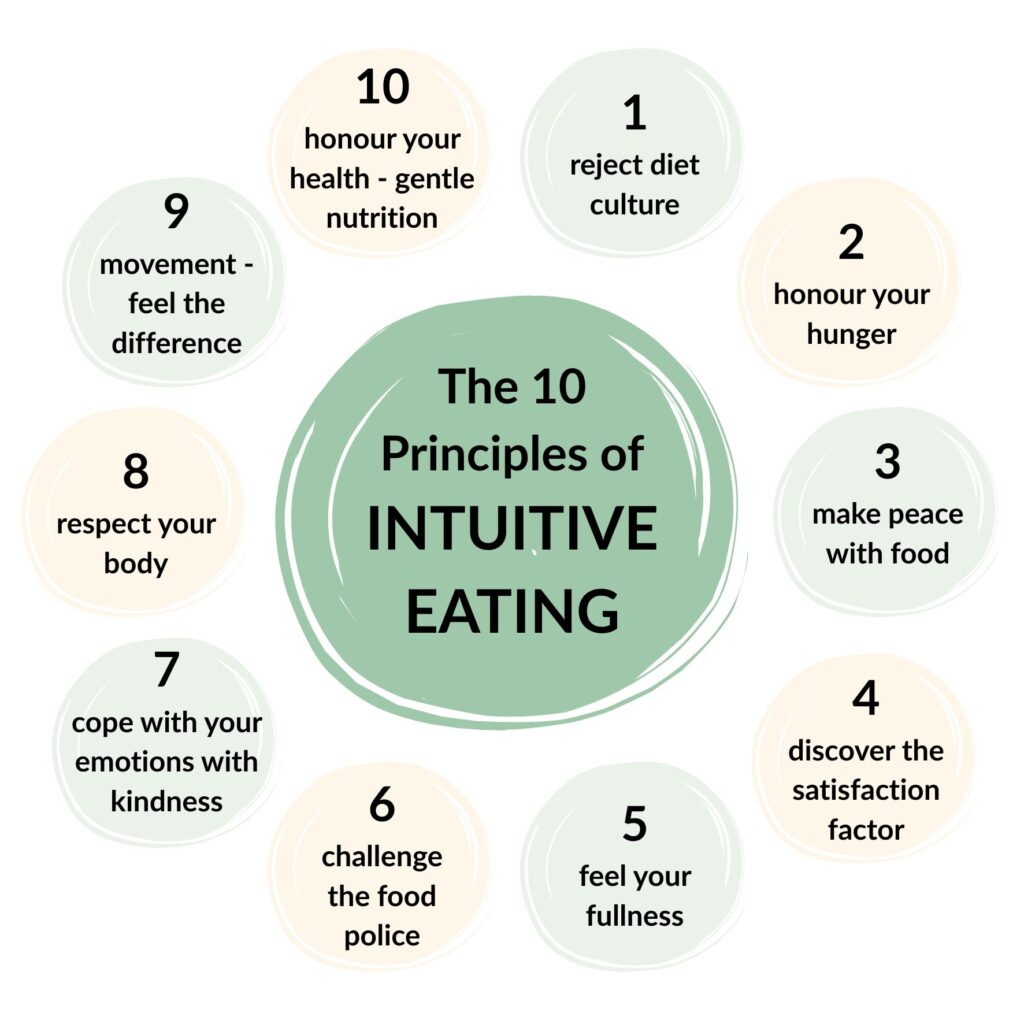
The Intuitive Eating Framework includes ten guiding principles. These are not rules to follow perfectly, but gentle invitations to rebuild trust in your body over time.
Reject Diet Culture#
Let go of the belief that another diet will finally “fix” your eating. Dieting often leads to cycles of restriction, cravings and guilt. Rejecting diet culture creates space for a more compassionate relationship with food.
Honour Your Hunger#
Hunger is your body’s way of asking for nourishment. Responding to hunger regularly helps maintain energy levels and reduces the likelihood of feeling overwhelmingly hungry later.
Make Peace with Food#
Give yourself unconditional permission to eat. Labelling foods as “good” or “bad” often increases cravings and feelings of deprivation. Allowing all foods reduces their emotional power over time.
Discover the Satisfaction Factor#
Eating isn’t only about nutrition. Enjoying your food, eating foods you genuinely like and creating pleasant eating experiences all contribute to feeling satisfied.
Feel Your Fullness#
As you eat, gently check in with your body. Notice when you’re comfortably satisfied rather than continuing because of habit, distraction or external expectations.
Challenge the Food Police#
Notice the internal voice that tells you you’ve been “good” or “bad” because of what you’ve eaten. These thoughts usually come from years of dieting rather than your body’s actual needs.
Cope with Your Emotions with Kindness#
Food can sometimes provide comfort, but it can’t solve difficult emotions. Building a range of coping strategies – such as talking with someone, journalling, mindfulness or rest – can support emotional wellbeing alongside eating.
Respect Your Body#
Bodies naturally come in different shapes and sizes. Respecting your body means appreciating what it allows you to do and treating it with care, regardless of its appearance.
Movement – Feel the Difference#
Choose movement because it feels good – not because you feel you have to “earn” food. Walking, gardening, dancing, swimming or playing with your children all count as meaningful movement.
Honour Your Health – Gentle Nutrition#
Gentle nutrition is about making food choices that support both health and enjoyment. It’s not about eating perfectly. What matters most is your overall pattern of eating over time – not one meal, one snack or one day.
Reproduced, based on the 10 Principles of Intuitive Eating by Evelyn Tribole and Elyse Resch
Gentle Reminder#
You don’t need to master all ten principles at once. Intuitive eating is a process of learning, practising and rebuilding trust with your body over time.
What Are the Benefits of Intuitive Eating?#
Many people notice positive changes in both their physical and emotional wellbeing as they move away from dieting.
A More Peaceful Relationship with Food#
Instead of constantly thinking about food, you can begin making choices with greater confidence and flexibility.
Improved Emotional Wellbeing#
Removing rigid food rules often reduces guilt, stress and anxiety around eating while supporting greater self-compassion.
“Health isn’t built by one meal – it develops through consistent, flexible habits over time.”
How to Get Started with Intuitive Eating#
Building trust in your body takes time. Intuitive eating begins with small, manageable changes rather than dramatic shifts.
Be Patient#
Learning to trust your body again takes time.
Eat Mindfully#
Slow down where possible and notice hunger, fullness and satisfaction.
Reflect Without Judgement#
Keeping a simple journal can help you recognise patterns without criticising yourself.
Seek Support#
Working with a non-diet Certified Practising Nutritionist can provide personalised guidance if you’re feeling overwhelmed or have a long history of dieting, digestive concerns or disordered eating.
Key Takeaway#
Small changes matter.
You don’t have to eat perfectly to improve your relationship with food. Every compassionate choice helps build trust in your body.
Common Misconceptions About Intuitive Eating#
“Is intuitive eating just another diet?”#
No.
Intuitive eating is the opposite of dieting. It removes food rules rather than creating new ones.
“Does intuitive eating mean eating anything you want?”#
Not exactly.
Permission to eat doesn’t mean eating without awareness. It means listening to both your physical needs and your enjoyment of food.
“Is intuitive eating only for people wanting to lose weight?”#
No.
Intuitive eating is weight-inclusive and suitable for people of all body sizes. Its goal is improving your relationship with food – not pursuing weight loss.
“Can children learn intuitive eating?”#
Yes.
Children are naturally intuitive eaters when supported in a responsive feeding environment. Parents and caregivers play an important role in helping children maintain that connection.
Myth#
Intuitive eating is another diet.
You can eat anything all the time.
It’s only for weight loss.
Children can’t do intuitive eating.
Fact#
Intuitive eating is an anti-diet framework that focuses on body trust rather than food rules.
Permission to eat is balanced with listening to hunger, fullness and satisfaction.
It’s a weight-inclusive approach suitable for people of all body sizes.
Children naturally eat intuitively and benefit from responsive feeding.
For Parents#
Children are born knowing when they’re hungry and when they’re full. Creating relaxed, pressure-free mealtimes can help preserve these natural skills.
The Bottom Line#
Intuitive eating offers an alternative to the cycle of dieting, restriction and food guilt. Rather than relying on external rules, it encourages you to rebuild trust in your body’s own wisdom.
Like any new skill, intuitive eating takes time and patience. Some principles may feel easier than others, especially if you’ve spent years dieting or feeling disconnected from your body’s cues.
Remember that there is no “perfect” intuitive eater. Every meal is another opportunity to practise curiosity, self-compassion and gentle nutrition.
Frequently Asked Questions#
Is intuitive eating evidence-based?
Yes. A growing body of research links intuitive eating with improved psychological wellbeing, body appreciation, healthier eating behaviours and reduced disordered eating.
Can I practise intuitive eating if I have a medical condition?
Often, yes. Intuitive eating isn’t about ignoring nutrition—it’s about balancing your body’s cues with evidence-based nutrition care. As a Certified Practising Nutritionist, I support adults, children and families to apply intuitive eating principles alongside individual nutrition recommendations for conditions such as IBS, diabetes, high cholesterol and other health concerns.
Does intuitive eating mean I shouldn’t care about nutrition?
Not at all. Gentle nutrition is one of the ten principles of intuitive eating. Nutrition matters – but it comes after rebuilding trust with food.
Will I gain weight with intuitive eating?
Everyone’s body responds differently. Intuitive eating does not aim to control body weight. Instead, it focuses on supporting your overall relationship with food, wellbeing and long-term health behaviours.
How long does it take to become an intuitive eater?
There is no set timeline. For some people it takes months, while others continue learning over many years. Progress is individual.
Is intuitive eating suitable for children?
Yes. Many of the principles align with responsive feeding practices and can support children in maintaining healthy relationships with food.
Can intuitive eating help if I’ve dieted for years?
Absolutely. Many people begin intuitive eating after years of chronic dieting. Rebuilding trust takes time, but support from a non-diet Certified Practising Nutritionist can make the process feel less overwhelming.
Ready to Build a More Peaceful Relationship with Food?#
If you’re feeling tired of food rules, dieting or constant guilt around eating, you don’t have to navigate it alone.#
I provide compassionate, evidence-based nutrition support for adults, children and families using a non-diet, weight-inclusive approach. Together, we can work towards a way of eating that feels nourishing, flexible and sustainable for you.


Explore more RESOURCES or follow along on Facebook and Instagram @lotushealthnut for gentle, practical support.